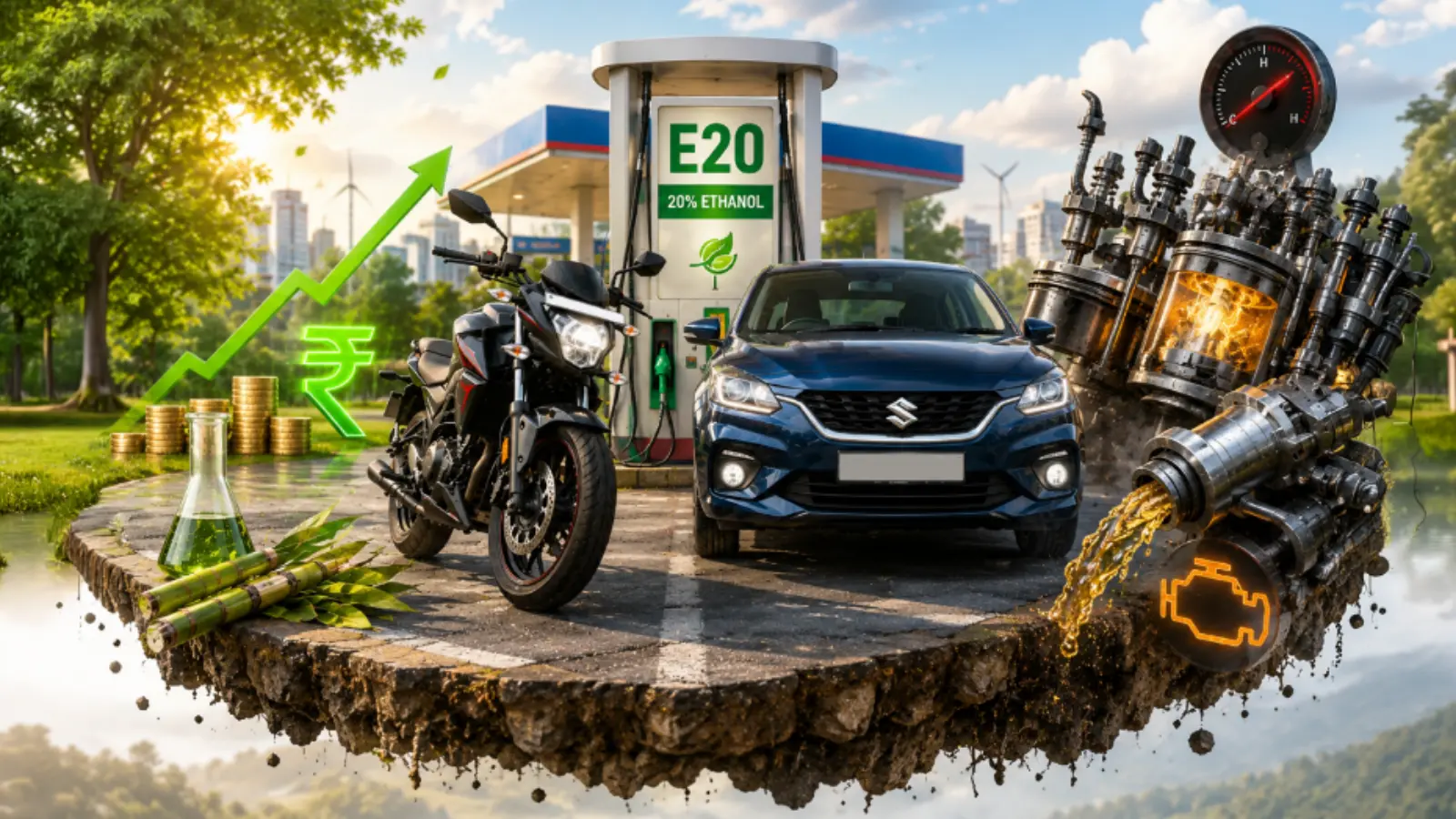
The shift towards ethanol-blended petrol in India has become one of the biggest automotive changes of 2026. With E20 fuel now widely available, car and bike owners are asking a simple question: does it actually reduce fuel costs, or can it cause long-term engine issues?
E20 fuel is a type of ethanol-blended petrol in India that contains 20% ethanol and 80% petrol. The government introduced it to reduce dependence on crude oil imports, cut emissions, and promote cleaner fuel alternatives.
How E20 Fuel Impacts Vehicle Performance
Modern vehicles designed for ethanol-blended petrol in India generally run smoothly on E20 fuel. Ethanol has a higher-octane rating than petrol, which can improve combustion quality and reduce engine knocking. This means newer engines may actually perform more efficiently under the right conditions.
However, differences become noticeable in older vehicles. One of the commonly discussed E20 fuel disadvantages is that ethanol burns differently from petrol. As a result, some drivers report slightly slower acceleration, reduced throttle response, and minor performance dips, especially in city traffic.
Vehicles manufactured after 2023 are largely E20-compatible, while older engines may need additional care or monitoring.
Mileage vs Cost: Does E20 Really Save Money?
The biggest debate around E20 fuel mileage is whether it actually helps drivers save money.
Ethanol is cheaper than petrol, which helps governments stabilize fuel pricing. However, ethanol has lower energy density, meaning vehicles may need more fuel to cover the same distance.
Real-world estimates suggest E20 fuel mileage can drop by around 3% to 10%, depending on the vehicle type, driving conditions, and maintenance.
So, while the per-litre cost of fuel may be slightly lower, the reduced mileage often balances the savings. For many users, the overall monthly fuel expense remains similar, which is why discussions around E20 fuel disadvantages are still ongoing.
Engine Risks: Can E20 Fuel Cause Long-Term Damage?
One of the most discussed concerns around ethanol mixed petrol in India is engine durability.
Ethanol tends to absorb moisture from the air more easily than petrol. Over time, this can lead to corrosion in fuel systems, particularly in older vehicles not designed for ethanol blending. Components like rubber seals, fuel lines, injectors, and pumps may wear out faster if not compatible with ethanol fuel.
However, newer E20-ready engines use upgraded materials designed to handle ethanol exposure more effectively. For these vehicles, long-term damage risk is significantly lower.
Still, experts suggest that regular servicing becomes more important with ethanol-blended petrol in India, especially in humid climates where moisture buildup is higher.
Compatibility: Which Vehicles Can Safely Use E20?
Most petrol vehicles launched after April 2023 are designed to safely run on ethanol-blended petrol in India and are E20-compatible.
Older vehicles, particularly those manufactured before 2020, may face compatibility issues depending on their fuel system design. Car manufacturers are now publishing E20 compatibility lists to help users identify whether their engines are suitable.
While diesel vehicles are not affected by E20 fuel, India is also exploring future biofuel blending options for diesel engines as part of its long-term energy strategy.
Maintenance Changes with E20 Fuel
Using ethanol mixed petrol in India may require slightly more frequent maintenance depending on the vehicle’s age and usage.
Common recommendations include:
- Regular fuel filter inspection
- Periodic injector cleaning
- Timely engine oil changes
- Checking rubber hoses and seals for wear and damage.
High-quality fuel stations and occasional use of fuel additives can also help reduce moisture-related issues and carbon buildup.
Real-World Driving Experience
Driver experiences with ethanol-blended petrol in India are mixed.
Many users with newer vehicles report no noticeable difference in everyday driving. However, some older vehicle owners mention slightly lower mileage and minor performance changes in congested city driving conditions.
Online discussions around E20 fuel disadvantages often highlight two recurring themes: reduced mileage and higher maintenance sensitivity in non-compatible engines.
Overall, the impact depends heavily on vehicle age, driving habits, and servicing routines.
Final Verdict: Is E20 Fuel Good or Bad for Drivers?
E20 fuel is neither entirely beneficial nor harmful; it depends on the vehicle.
For newer E20-compatible cars, ethanol-blended petrol in India is generally safe and supports cleaner emissions and reduced oil dependence. For older vehicles, however, concerns around corrosion, reduced E20 fuel mileage, and maintenance costs remain valid.
Among the key E20 fuel disadvantages are slight mileage reduction and potential fuel system damage in non-compatible engines. That said, proper servicing can significantly reduce most of these risks.
Fuel additives like Milex can also help in maintaining engine health by reducing moisture buildup, cleaning injectors, and improving combustion efficiency. In some cases, this can help stabilize E20 fuel mileage and support smoother long-term performance.
Over the upcoming years, we will see India expanding ethanol-blended petrol adoption and exploring future ethanol blended diesel innovations. Keeping this in mind, vehicle owners will need to adapt their maintenance habits. With the right care and fuel management, and also with the help of fuel additives like MilexGlobal, E20 fuel can be used effectively without major issues in most modern vehicles.
FAQs
Is E20 fuel mandatory in India in 2026?
E20 fuel is being made available across India, but it is not strictly mandatory for all vehicles yet. Its use depends on your vehicle type and fuel availability in your area.
Can I mix E20 fuel with regular petrol in my car?
Yes, you can mix E20 with regular petrol. Most E20-compatible cars handle it fine, but performance may vary slightly depending on the engine.
Does E20 fuel expire faster than normal petrol?
Yes, E20 fuel can go bad a little faster because ethanol absorbs moisture. It’s better not to store it in the tank for too long.
Will E20 fuel affect my car warranty?
No, if your car is E20-compatible, using it will not affect your warranty. Most new cars after 2023 are designed for it.
Are two-wheelers safe to run on E20 fuel?
Yes, newer two-wheelers are safe to use with E20 fuel. Older bikes may see small changes in mileage or performance over time.
🔗Related Reads for Will E20 Fuel Reduce Costs or Damage Engines in India? Full Breakdown (2026)
As India rapidly shifts toward ethanol-blended fuels, understanding how E20 affects mileage, engine compatibility, fuel efficiency, and long-term maintenance has become essential for every vehicle owner. These related articles explore the real-world impact of E20 fuel from multiple angles: