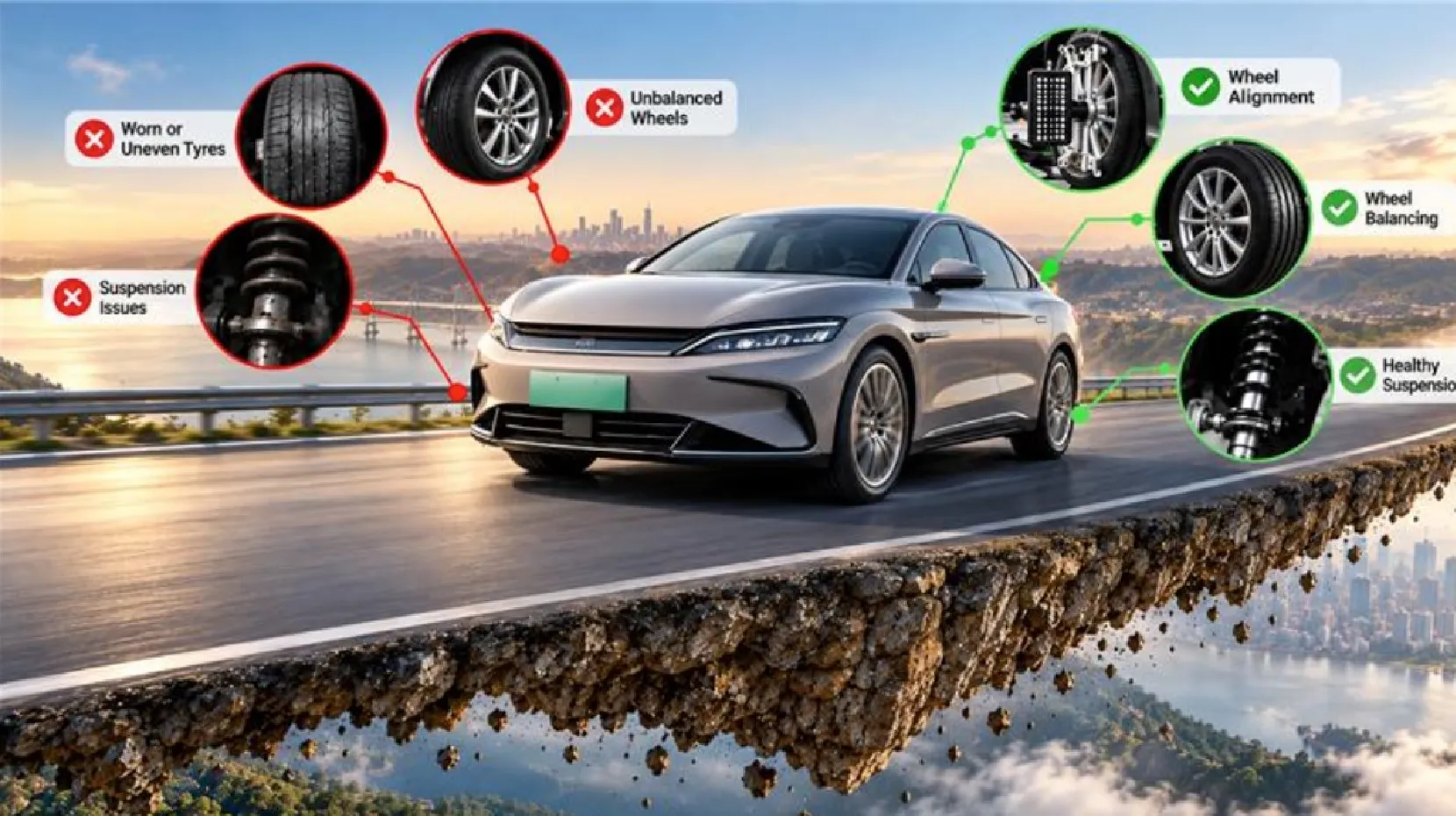
Your car’s tyres are among the most important components affecting safety, handling and driving comfort. Yet two routine services, wheel alignment and wheel balancing, are often confused with each other. While both help maintain smooth and controlled driving, they address different problems.
Understanding wheel balancing and alignment can help you recognise warning signs early, avoid unnecessary tyre wear, and know when your car needs professional attention.
What Is Wheel Balancing?
So, what is wheel balancing? It is the process of making sure the weight of a wheel and tyre assembly is evenly distributed around its axle.
Even a small difference in weight distribution can cause the wheel to rotate unevenly, particularly at higher speeds. During car wheel balancing, a technician places the wheel on a balancing machine to identify areas where the weight is uneven. Small weights are then attached to specific points on the wheel to correct the imbalance.
Proper wheel balancing helps reduce vibrations and allows the tyre to rotate more smoothly. It can also make the drive more comfortable and reduce unnecessary stress on components such as wheel bearings and suspension parts.
What Is Wheel Alignment?
Wheel alignment refers to adjusting the angles of the wheels so that they are correctly positioned in relation to each other and the road.
A vehicle’s alignment is generally assessed through three main angles: camber, caster, and toe. These determine how the wheels sit and point while the car is being driven.
Unlike balancing, alignment is not about the distribution of weight in the wheel. It is about ensuring the wheels are correctly positioned for stable handling, straight-line driving and even tyre contact with the road.
Misalignment can occur after hitting potholes, kerbs or other obstacles. It can also develop over time due to normal wear of suspension and steering components.
Wheel Alignment vs Wheel Balancing: Key Differences
The easiest way to understand what wheel alignment and balancing is to look at the problem each service addresses.
| Wheel Balancing | Wheel Alignment |
| Corrects uneven weight distribution in the wheel and tyre | Corrects the angles and positioning of the wheels |
| Mainly addresses wheel or steering vibrations | Mainly addresses handling and uneven tyre wear |
| Uses small balancing weights | Involves adjusting wheel alignment angles |
| Often noticed as vibration at certain speeds | Often noticed through pulling or an off-centre steering wheel |
| Usually performed on a balancing machine | Performed using specialised alignment equipment |
In simple terms, balancing helps the wheel rotate smoothly, while alignment helps the wheels point and sit correctly.
This also means wheel alignment is not the same as wheel balancing. They are separate services, although both contribute to better tyre performance and driving stability.
Signs Your Car Needs Wheel Balancing
Knowing the common signs of imbalance can help you identify when your car needs attention. Look out for:
- Steering wheel vibrations: You may feel noticeable shaking through the steering wheel, particularly as your speed increases.
- Vibrations through the vehicle: An imbalance may sometimes be felt through the seats or floor rather than just the steering wheel.
- Uneven tyre wear: An imbalanced wheel can contribute to irregular wear over time.
- Recent tyre replacement: New tyres should generally be balanced when fitted to the wheels.
- A wheel has lost a balancing weight: Missing weights can affect the balance of the wheel and tyre assembly.
If you notice persistent vibrations while driving, having the wheels inspected rather than assuming the issue is simply a tyre problem.
Signs Your Car Needs Wheel Alignment
Alignment problems can show up in several ways. Common signs include:
- The car pulls to one side: If your vehicle consistently moves left or right when you are trying to drive straight, its alignment may need checking.
- An off-centre steering wheel: If the steering wheel remains tilted when the car is travelling straight, it can indicate an alignment issue.
- Uneven tyre wear: Excessive wear on the inner or outer edges of a tyre can be linked to incorrect wheel angles.
- Steering feels unusual: Changes in steering response or stability can sometimes point to an alignment problem.
- After hitting a pothole or kerb: A strong impact can alter wheel alignment, even if there is no obvious damage.
When Do You Need Both Wheel Alignment and Balancing?
There are situations where getting both services checked makes sense. For example, if you have recently hit a large pothole, replaced tyres or noticed both vibrations and uneven handling, your vehicle may require wheel balancing and alignment.
A technician can inspect the wheels, tyres, steering, and suspension to determine which service is required.
It is also possible for one issue to exist without the other. A vibration does not automatically mean your alignment is incorrect, just as a car pulling to one side does not necessarily mean its wheels are unbalanced.
Getting the right diagnosis helps avoid unnecessary servicing.
How Wheel Alignment and Balancing Affect Tyre Life
Correct alignment and balancing can contribute to even more tyre wear.
When wheels are not properly aligned, certain sections of the tyre can experience more contact with the road than others. Over time, this may cause uneven or accelerated wear.
Similarly, an unbalanced wheel can create vibrations and uneven forces as the tyre rotates. Addressing the imbalance can help the tyre and wheel assembly operate more smoothly.
So, does wheel balancing improve tyre life? Proper balancing can help reduce irregular wear caused by wheel imbalance, but tyre life also depends on factors such as tyre pressure, driving habits, road conditions, load and regular maintenance.
How Often Should You Get Wheel Alignment and Balancing?
There is no single interval that works for every vehicle. Your car manufacturer’s recommendations should be the starting point.
You should also consider getting the wheels checked when:
- You will install new tyres.
- You notice vibrations while driving.
- The car begins pulling to one side.
- The steering wheel is no longer centred.
- You hit a significant pothole or kerb.
- You notice unusual or uneven tyre wear.
- Steering or suspension components have been repaired or replaced.
Regular tyre inspections can help identify these issues before they become more noticeable.
Conclusion
Wheel alignment and balancing may sound similar, but they solve different problems. Wheel balancing corrects uneven weight distribution in the wheel and tyre assembly, while wheel alignment adjusts the angles at which the wheels meet the road.
Knowing what wheel balancing is and how it differs from alignment makes it easier to recognise common warning signs and get the right service when needed. Regular checks can also help maintain smoother handling, even more tyre wear and a more comfortable drive.
Beyond tyres and wheels, the condition of your fuel system and engine also plays a role in your vehicle’s overall performance. A fuel additive such as Milex can be used as part of regular vehicle maintenance to support fuel-system and engine performance. Combined with proper tyre care, servicing and responsible driving habits, it can be another consideration in keeping your vehicle running efficiently.
FAQs
What is the difference between wheel alignment and wheel balancing?
Wheel alignment adjusts the angles and positioning of your vehicle’s wheels, so they sit correctly on the road. Wheel balancing corrects uneven weight distribution between the wheel and tyre assembly. Alignment mainly affects handling and tyre wear, while balancing helps reduce vibrations and ensures smoother wheel rotation.
Is wheel alignment the same as wheel balancing?
No. Wheel alignment and wheel balancing are two different services. Alignment focuses on the angles of the wheels, while balancing ensures the weight of the wheel and tyre is evenly distributed. Your car may need one or both depending on the symptoms and condition of the tyres and wheels.
What is wheel balancing in a car?
What is wheel balancing in a car? It is the process of correcting uneven weight distribution in a wheel and tyre assembly. Small weights are attached to specific points on the wheel to balance it, helping reduce vibrations and allowing the wheel to rotate smoothly.
What is wheel alignment?
Wheel alignment is the process of adjusting the angles of a vehicle’s wheels, so they are correctly positioned in relation to one another and the road. Proper alignment can help maintain stable handling, straight-line driving and more even tyre wear.
How do I know if my car needs wheel balancing?
Common signs include vibrations through the steering wheel, seats, or floor, particularly at higher speeds. Uneven tyre wear or vibrations after fitting new tyres can also indicate that car wheel balancing may be required. A professional inspection can confirm the cause.
How do I know if my car needs wheel alignment?
Your car may need alignment if it consistently pulls to one side, the steering wheel sits off-centre while driving straight, or the tyres show uneven wear on their inner or outer edges. Alignment should also be checked after a significant impact with a pothole or kerb.
When do you need both wheel alignment and balancing?
You may need both wheel balancing and alignment after fitting new tyres, hitting a major pothole or kerb, or noticing both vibrations and handling issues. A technician can inspect the wheels, tyres and suspension to determine which services are necessary.
Does wheel balancing improve tyre life?
Proper wheel balancing can help reduce uneven wear caused by an imbalance and allow the tyre and wheel assembly to rotate more smoothly. However, tyre life also depends on factors such as tyre pressure, alignment, road conditions, driving habits, and regular maintenance.