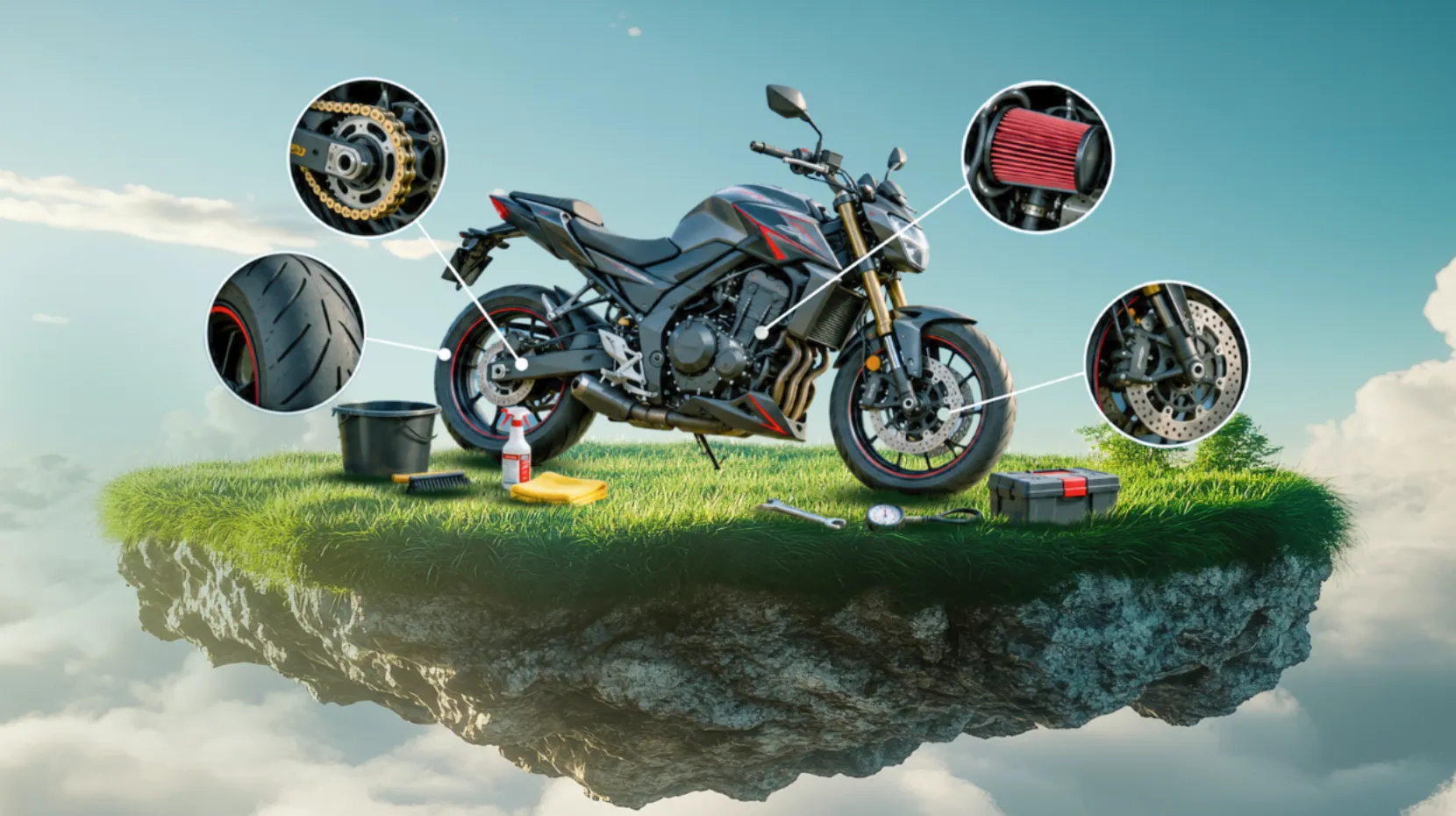
The monsoon can be tough on your bike. Rainwater, muddy roads, potholes, and moisture can affect everything from your tyres and brakes to the chain and engine. Following a few simple bike maintenance tips after the rainy season can help identify problems early and keep your bike ready for everyday rides.
Good bike maintenance is not just about keeping your bike clean. It also means checking important components that may have been exposed to water and dirt throughout the monsoon. Here are some simple checks to include in your post-monsoon routine.
Why Is Post-Monsoon Bike Maintenance Important?
During the monsoon, your bike is regularly exposed to water, mud, and humidity. These conditions can cause rust, reduce lubrication, and affect components such as the chain, brakes, and electrical connections. Regular bike maintenance after the rainy season can help catch these issues before they become bigger problems.
A basic inspection can also help you understand whether your bike needs servicing. These bike maintenance tips are particularly useful if you regularly ride through waterlogged or muddy roads.
Clean Your Bike Thoroughly
The first step in bike maintenance is giving your bike a thorough clean. Mud and dirt can be collected around the wheels, chain, brakes, suspension, and mudguards. If they remain there for too long, they can contribute to corrosion and make it harder to spot damaged components.
Use clean water and an appropriate cleaning method to remove accumulated dirt. Avoid directing high-pressure water at sensitive electrical components, bearings, and other areas where water can enter. Cleaning your bike properly is one of the simplest bike maintenance tips you can follow after the monsoon.
Check Your Bike Tyre Pressure
Your tyres have a major role in grip, stability, and braking. After the monsoon, inspect them for cuts, cracks, punctures and uneven wear. Also check the bike tyre pressure and maintain it according to the manufacturer’s recommended level.
Incorrect bike tyre pressure can affect handling, comfort, braking, and tyre life. Both underinflated and overinflated tyres can affect the way your bike feels on the road. Checking tyre pressure regularly should therefore be an important part of your bike maintenance routine.
Inspect the Tyre Tread
Tyre tread helps your bike maintain contact with the road, particularly on wet surfaces. Monsoon riding can expose tyres to potholes, sharp objects, and rough roads, so check the tread and sidewalls carefully.
If you notice excessive or uneven wear, cracks, bulges or other visible damage, have the tyres inspected. Maintaining the right bike tyre pressure along with adequate tread can help improve stability and make everyday riding more comfortable.
Check and Lubricate the Chain
The chain is another component that needs attention after the monsoon. Rainwater can wash away existing lubricants, while mud and moisture can encourage rust. A dry or poorly maintained chain can increase wear and affect the smoothness of your ride.
Inspect the chain for rust, excessive dirt, and unusual slack. Clean it using a suitable chain cleaner and apply motorcycle chain lubricant according to the manufacturer’s recommendations. Regular chain care is one of the most important bike maintenance tips, especially after frequent riding in wet conditions.
Check Your Bike Engine Oil
Engine oil helps lubricate the moving components inside your engine and support smooth operation. After a season of frequent riding in rain and challenging road conditions, check your bike’s engine oil according to the manufacturer’s recommended schedule.
Pay attention to the oil level and condition. If your bike has been exposed to significant waterlogging or you notice anything unusual, get it inspected by a professional. Timely bike engine oil checks are an important part of regular bike maintenance.
Do not change the oil simply based on how it looks. Follow your manufacturer’s recommended replacement interval and use the appropriate grade of bike engine oil for your motorcycle.
Inspect the Brakes
Wet and muddy roads can put additional demands on your braking system. Check the brake pads or shoes for wear and pay attention to any changes in braking response.
If you notice unusual sounds, excessive lever travel, reduced braking performance or vibrations, get the brakes checked. Regular brake inspection should be part of your bike maintenance routine, especially after prolonged monsoon riding.
Check the Battery and Electrical Components
Moisture can affect battery terminals, electrical connections, switches, and other components. Check the battery terminals for signs of corrosion and make sure the connections are secure.
Also test your headlights, indicators, brake lights, and horns. If you notice difficulty starting the bike, flickering lights, or other electrical issues, have the battery and charging system inspected. Checking these components is another useful bike maintenance tip after the rainy season.
If the bike feels different when riding over bumps, have the suspension inspected. Regular checks can help identify worn components early and are an important part of good bike maintenance.
Check for Rust and Corrosion
Frequent exposure to rainwater can increase the chances of rust, particularly around the chain, fasteners, exhaust, and exposed metal surfaces. Look for early signs of corrosion during your post-monsoon inspection.
Cleaning and drying your bike regularly can help reduce the build-up of moisture and dirt. Checking rust should be included in your list of bike maintenance tips, especially if your bike is regularly parked outdoors.
Consider Fuel-System Maintenance
Your fuel system can also benefit from regular maintenance. If your bike has been used frequently in challenging conditions, following the recommended service schedule can help maintain efficient engine operation.
A suitable fuel additive may also be used as part of routine maintenance, provided it is compatible with your motorcycle. Milex fuel additives can complement regular bike maintenance by supporting fuel-system cleanliness and efficient engine operation.
However, fuel additives should not be considered a substitute for servicing. If your bike develops an engine, electrical or mechanical problem, have the underlying issue inspected by a qualified professional.
Follow Smart Bike Riding Tips After the Monsoon
Good bike riding tips can complement regular maintenance. Avoid sudden acceleration and braking on wet or damaged roads, maintain a safe distance from other vehicles and be cautious around potholes and standing water.
Even after the rain stops, roads can remain slippery because of mud, oil and debris. Following practical bike riding tips can help reduce unnecessary stress on your tyres, brakes and suspension.
Create a Simple Post-Monsoon Maintenance Checklist
A simple checklist can make bike maintenance easier. Check your bike tyre pressure, inspect the tread, clean and lubricate the chain, check your bike engine oil, inspect the brakes, and test the electrical components.
You should also look for rust, check the suspension, and make sure all lights and indicators are working. These basic bike maintenance tips can help you spot issues before they turn into more expensive repairs.
Conclusion
The end of the monsoon is a good time to give your bike some extra attention. From checking bike tyre pressure and inspecting the chain to checking bike engine oil, brakes and electrical components, a few simple steps can help keep your motorcycle in good condition.
As part of regular bike maintenance, it is also worth paying attention to your bike’s fuel system. Milex fuel additives can complement routine maintenance by supporting fuel-system cleanliness and efficient engine operation, helping you keep your bike ready for everyday rides.
Regular bike maintenance does not have to be complicated. Following these bike maintenance tips, along with sensible bike riding tips, can help you prepare your bike for smoother and more reliable rides after the rainy season.
FAQs
How often should I check my bike after the monsoon?
A thorough inspection after the rainy season is useful, especially if you regularly ride through heavy rain, muddy roads or waterlogged areas. Regular bike maintenance can help identify problems early.
What should my bike tyre pressure be?
The correct bike tyre pressure depends on your motorcycle and the load you are carrying. Check the owner’s manual or the manufacturer’s recommended pressure and check it regularly.
How often should I change bike engine oil?
The replacement interval for bike engine oil varies by motorcycle, oil type, and usage. Always follow the service schedule and oil specifications recommended by your manufacturer.
Can rain damage my bike chain?
Yes. Rainwater can wash away chain lubricants and allow dirt and moisture to contribute to rust. Cleaning and lubricating the chain regularly is an important bike maintenance tip after riding in wet conditions.
What are some useful bike riding tips after the monsoon?
Some useful bike riding tips include maintaining a safe speed, avoiding sudden braking, watching out for potholes and debris, and keeping a safe distance from other vehicles.
Should I check bike tyre pressure after riding in the rain?
Yes. Checking bike tyre pressure regularly is good practice regardless of the weather. Correct pressure can support better handling, braking, and tyre life.
Can fuel additives be used for bikes?
Some fuel additives are designed for petrol-powered two-wheelers. Always check whether the product is suitable for your motorcycle and follow the recommended dosage. A suitable product can complement regular bike maintenance.
What are the most important post-monsoon bike maintenance tips?
Start with the basics: clean the bike, check bike tyre pressure, inspect the tyres and brakes, clean and lubricate the chain, check bike engine oil, inspect the battery, and look for rust or corrosion. These are some of the most useful bike maintenance tips after the rainy season.