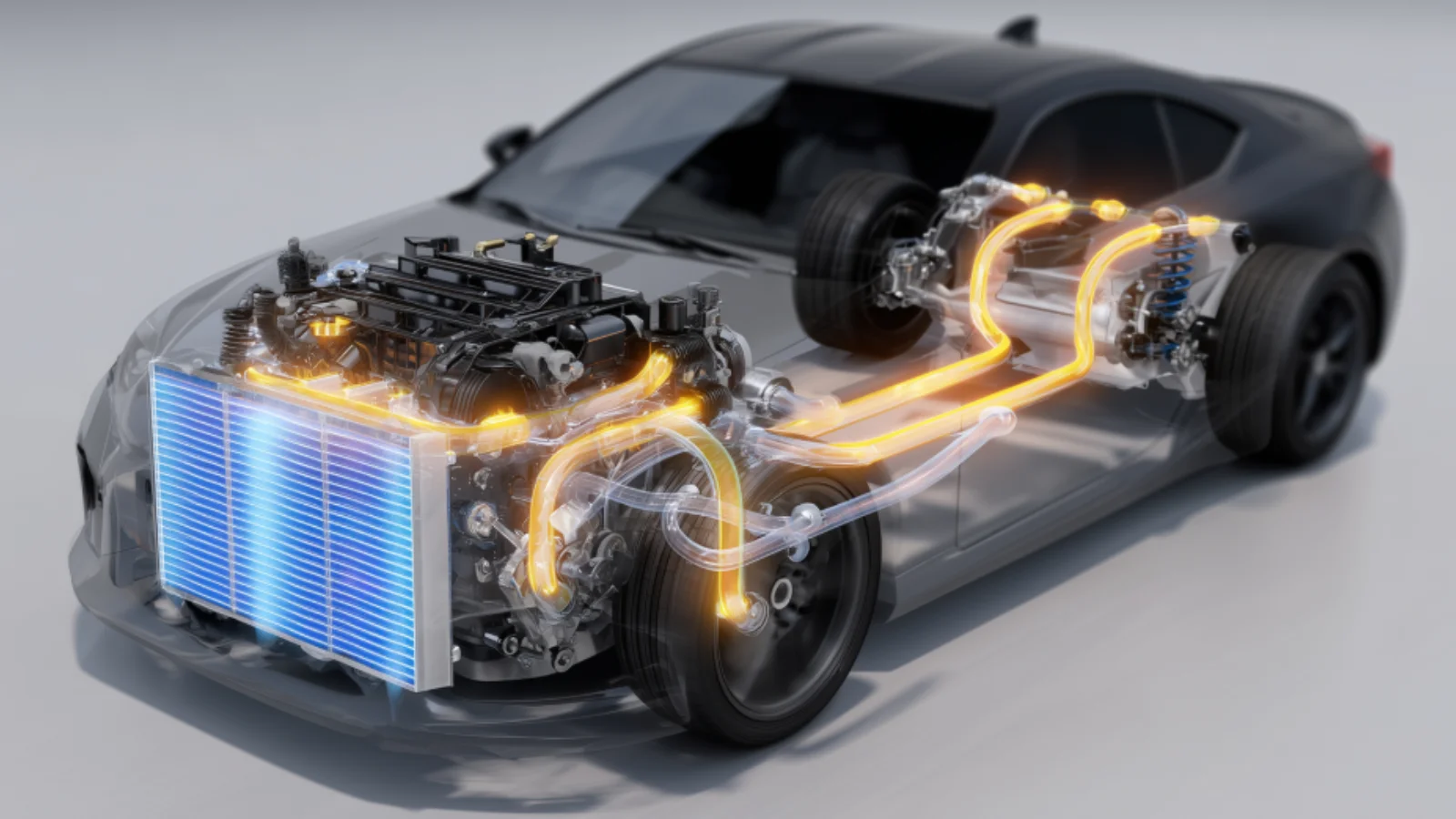
There’s something inherently simple and honest about machines that rely on air to keep themselves running. No complex plumbing, no coolant leaks, just the raw interaction between metal and moving air. That’s the essence of air-cooled vehicles — a design that has powered everything from vintage cars to modern commuter bikes.
But simplicity doesn’t always mean compromise. In fact, understanding how air-cooled engines work can reveal a lot about performance, efficiency, and even how you care for your vehicle.
What Is an Air-Cooled Engine
An air cooled engine is exactly what it sounds like — an engine that uses air, rather than liquid coolant, to regulate its temperature. Instead of circulating coolant through internal passages, these engines rely on external airflow to dissipate heat generated during combustion.
If you’ve ever seen fins on a motorcycle engine, you’ve already seen air cooling in action. Those fins increase surface area, allowing heat to escape more efficiently as air passes over them.
How the Air Cooling System Works in Vehicles
The air cooling system in engine design is built around a simple principle: maximise exposure to moving air.
As the engine runs, it generates heat through fuel combustion and friction. In air cooled vehicles, this heat is transferred to the outer surfaces of the engine. The cooling fins then help disperse that heat into the surrounding air.
In moving vehicles, natural airflow does most of the work. In some cases, especially in stationary or low-speed conditions, fans assist in directing air over the engine to maintain optimal temperature.
Key Components of an Air-Cooled Engine
Despite their simplicity, air-cooled engines are carefully engineered. Some key components include:
- Cooling fins that increase surface area for heat dissipation
- Engine casing designed to conduct heat efficiently
- Blower or cooling fan in certain models
- Air ducts or shrouds to guide airflow
Each element works together to ensure that heat doesn’t build up faster than it can be released.
Advantages of Air-Cooled Engines
There’s a reason air cooled engine advantages are still appreciated today.
First, they are mechanically simpler. Without radiators, coolant, or water pumps, there are fewer components that can fail. This also makes them lighter, which is especially beneficial for motorcycles.
They’re also easier to maintain. There’s no coolant to top up, no risk of leaks, and fewer moving parts to worry about.
Another often overlooked benefit is quicker warm-up time. Since there’s no liquid coolant to heat, the engine reaches operating temperature faster, which can be useful in certain riding conditions.
Limitations of Air Cooling in Modern Vehicles
However, air cooling does come with its challenges.
The biggest limitation is temperature control. Air isn’t as efficient as liquid when it comes to absorbing and transferring heat. This means air-cooled engines can struggle in extremely hot climates or during prolonged idling.
They also tend to operate with wider temperature variations, which can impact engine wear over time. Noise is another factor, as the absence of a liquid jacket means less sound dampening.
These limitations are why most modern cars have moved towards liquid cooling systems.
Air-Cooled vs Liquid-Cooled Engines: Key Differences
The difference between air cooled vehicles and liquid-cooled ones comes down to precision.
Liquid-cooled engines offer tighter temperature regulation, allowing for higher performance and efficiency, especially in larger engines. They are better suited for high-speed, long-duration driving.
Air-cooled engines, on the other hand, prioritise simplicity, lower weight, and ease of maintenance. They’re ideal for smaller vehicles, especially motorcycles and scooters used in everyday commuting.
It’s not about which is better overall — it’s about which suits the purpose.
How Heat Impacts Performance in Air-Cooled Engines
Heat is both a necessity and a challenge for any engine. In air-cooled systems, managing that heat becomes even more critical.
Excessive heat can lead to reduced engine efficiency, lower power output, and increased wear on internal components. It can also affect fuel combustion, making it less consistent and efficient.
On the other hand, an engine running too cool can also be inefficient. The balance lies in maintaining an optimal temperature range — something that air-cooled engines must achieve with fewer tools.
How Fuel Additives Help Improve Combustion Efficiency in Air-Cooled Engines
This is where fuel quality starts to make a real difference.
In air cooled engines, where temperature control isn’t as precise, clean and efficient combustion becomes even more important. Deposits in the fuel system or incomplete combustion can increase heat and reduce performance.
Fuel additives like Milex Fuel Additives help optimise this process. By improving fuel atomisation and reducing carbon build-up, they support smoother combustion and more consistent engine performance.
The result is not just better efficiency, but also reduced stress on the engine — something that matters greatly in air cooled vehicles.
If you’re relying on a system that depends heavily on airflow and heat dissipation, ensuring your fuel burns cleaner and more efficiently is a simple but powerful way to maintain performance.
FAQs
Are air-cooled engines still used in modern vehicles?
Yes, they are still commonly used in motorcycles, scooters, and small utility engines, although most cars have shifted to liquid cooling.
Do air-cooled engines overheat faster than liquid-cooled ones?
They can, especially in heavy traffic or hot weather, as air is less efficient at removing heat compared to liquid.
Is maintenance easier for air-cooled engines?
Generally, yes. With fewer components like radiators and coolant systems, maintenance tends to be simpler.
Are air-cooled bikes suitable for long rides?
They can handle long rides, but consistent high speeds and hot conditions may require more frequent breaks to avoid overheating.
Do air-cooled engines affect mileage?
They can, particularly if the engine runs hotter than optimal, which may reduce combustion efficiency.
Why are most modern cars not air-cooled?
Because liquid cooling provides better temperature control, which supports higher performance, improved efficiency, and stricter emission standards.
Related Reads for What Are Air-Cooled Vehicles and How They Affect Engine Performance
If you’re exploring how engine design impacts performance, efficiency, and long-term reliability, these articles will help you understand fuel behavior, deposits, and overall engine health: