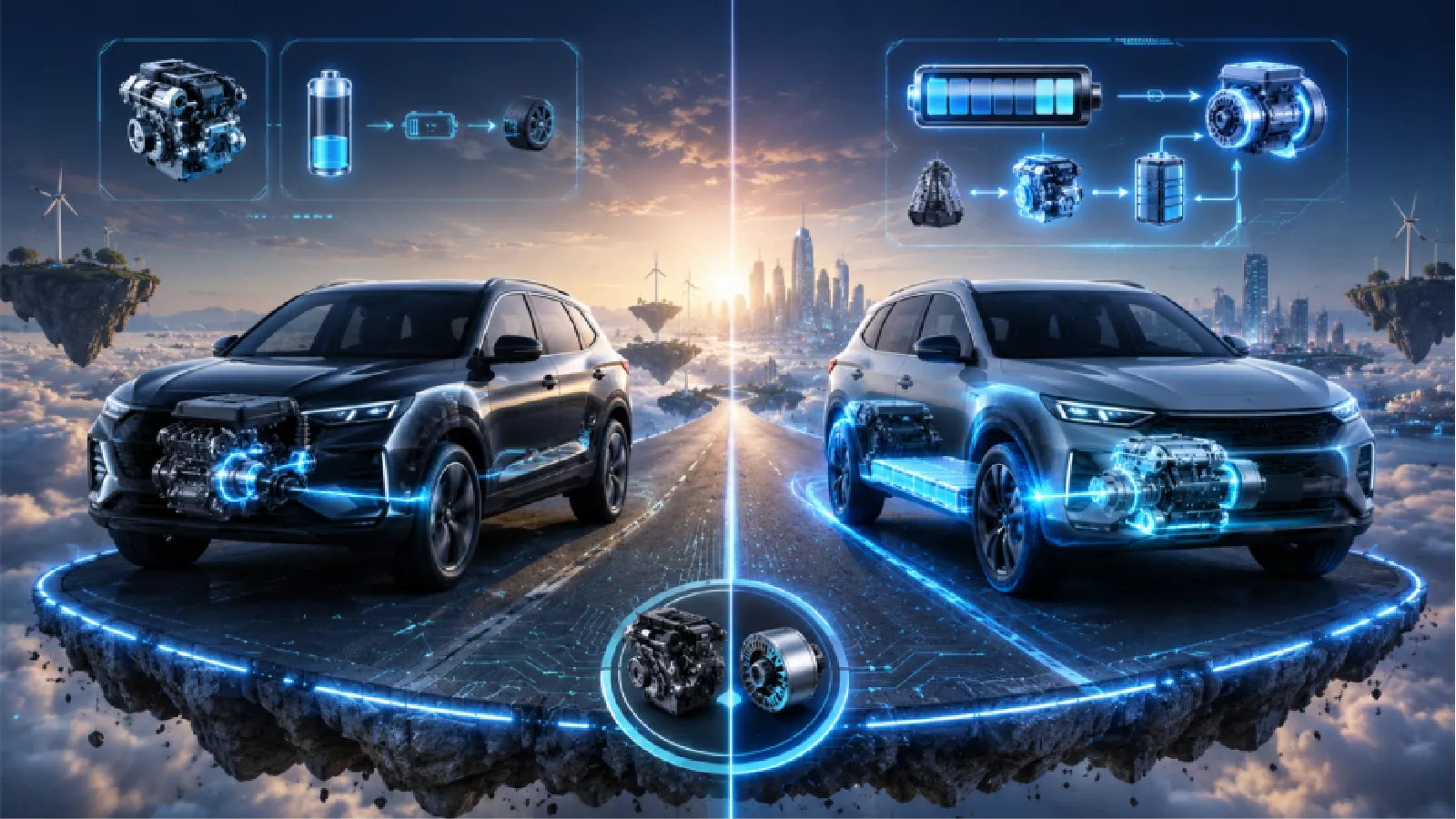
Hybrid vehicles are becoming more common as drivers look for better fuel efficiency and lower emissions. But when researching hybrid car types, many people come across terms like MHEV and HEV and get confused. Understanding what is MHEV and what is HEV can help you choose the right vehicle for your driving needs.
Both systems combine a petrol or diesel engine with electric support, but they work differently and offer different levels of performance and fuel savings.
What Is an MHEV (Mild Hybrid Electric Vehicle)
To understand what is MHEV, think of it as a vehicle that uses a small electric motor to assist the engine rather than power the car completely.
An MHEV, or Mild Hybrid Electric Vehicle, cannot run only on electricity. Instead, the electric motor supports the engine during acceleration, starting, and stop-start driving. This improves fuel economy and reduces strain on the engine.
The hybrid system in cars like MHEVs usually includes:
- A conventional engine
- A small battery
- An electric starter-generator
MHEVs are popular because they are simpler, lighter, and more affordable compared to stronger hybrid systems.
What Is an HEV (Hybrid Electric Vehicle)
If you are wondering what is HEV, it refers to a Hybrid Electric Vehicle that can use both the engine and electric motor to drive the car.
Unlike mild hybrids, HEVs can operate for short distances using only electric power, especially at low speeds. The battery charges automatically through regenerative braking and the engine itself, so there is no need for external charging.
The hybrid system in cars with HEV technology is more advanced because the electric motor plays a bigger role in moving the vehicle.
HEVs are widely known for delivering better fuel efficiency, especially in city traffic where frequent braking helps recharge the battery.
Key Differences Between MHEV and HEV
The biggest point in the mild hybrid vs full hybrid discussion is how much the electric motor contributes to driving. An MHEV only assists the engine, while an HEV can actually power the car on electricity alone for short periods.
Here are the main differences:
- MHEV systems are simpler and cheaper
- HEV systems provide stronger electric support
- HEVs usually deliver better fuel savings
- MHEVs have smaller batteries
- HEVs perform better in heavy traffic conditions
When comparing different hybrid car types, HEVs are generally more fuel-efficient, while MHEVs are more budget friendly.
| Feature | MHEV (Mild Hybrid) | HEV (Full Hybrid) |
|---|---|---|
| Electric-only driving | Not possible | Yes, at low speeds |
| Electric motor role | Assist only | Can drive the car |
| Battery size | Small | Larger |
| System complexity | Simpler | More advanced |
| Purchase cost | More affordable | Higher upfront cost |
| Fuel savings | Moderate | Higher |
| Best for | Mixed driving & budget | City & heavy traffic |
| External charging needed | No | No |
How MHEV and HEV Systems Work in Real Driving
Fuel efficiency is one of the biggest reasons people explore different hybrid car types. MHEVs improve mileage compared to traditional vehicles, but HEVs usually offer greater fuel savings because the electric motor handles more of the driving work.
In city driving:
- MHEVs provide moderate fuel savings
- HEVs provide higher fuel savings
On highways, the gap becomes smaller because both systems rely more on the engine at steady speeds.
| Driving Condition | MHEV Savings | HEV Savings |
|---|---|---|
| City / Stop-Start Traffic | Moderate | Higher |
| Highway / Steady Speed | Similar to HEV | Similar to MHEV |
Cost, Maintenance and Practical Usage Differences
MHEVs are generally more affordable to buy and maintain because the system is less complex. HEVs cost more initially, but they can reduce fuel expenses over time. Maintenance for HEVs may also involve more advanced electrical components.
Drivers who mainly travel short urban distances may benefit more from HEVs, while MHEVs can be practical for mixed driving conditions and tighter budgets.
| Aspect | MHEV | HEV |
|---|---|---|
| Upfront Cost | Lower | Higher |
| Maintenance Complexity | Simpler | More advanced electrical parts |
| Long-term Fuel Savings | Moderate | Greater over time |
| Ideal Use Case | Mixed driving, budget-conscious | Short urban distances |
Which Hybrid System Is Better for Your Driving Needs
The answer depends on your driving style and budget.
If you want to lower upfront costs with improved efficiency, an MHEV can be a good choice. If fuel savings and electric driving support matter more, an HEV may be better.
Understanding what is MHEV, what is HEV, and the differences in the hybrid system in cars makes it easier to compare modern hybrid options confidently.
How Fuel Additives Support Engine Performance in Hybrid Systems
No matter which hybrid system you choose, maintaining engine performance is important for long-term efficiency. Fuel additives can help keep injectors clean, reduce deposits, and improve combustion quality in hybrid vehicles.
Trusted fuel additives from Milex Global are designed to support smoother engine performance and better fuel efficiency across different hybrid car types. This helps drivers get the most out of their vehicles every day.
FAQs
Is MHEV better than HEV for city driving?
HEVs are generally better for city driving because they can run on electric power at low speeds, improving fuel efficiency in traffic.
Do MHEV cars run on electric power alone?
No, MHEV cars cannot run only on electricity. The electric motor only assists the petrol or diesel engine.
Which hybrid system offers better mileage?
HEVs usually offer better mileage because the electric motor plays a larger role in powering the vehicle.
Are HEV cars more expensive than MHEV?
Yes, HEV cars are usually more expensive due to their larger battery and more advanced hybrid technology.
Do both MHEV and HEV use petrol engines?
Yes, both systems use a petrol engine along with electric support to improve efficiency and performance.
Which hybrid type is more common in India?
MHEVs are currently more common in India because they are more affordable and available across more vehicle segments.
Related Reads
As hybrid vehicle technology becomes more common in India, understanding the difference between Mild Hybrid Electric Vehicles (MHEV) and Hybrid Electric Vehicles (HEV) is essential for buyers focused on fuel efficiency, maintenance, and long-term performance. These related articles provide deeper insights into hybrid systems and evolving automotive technology:
| # | Article Title | Topic |
|---|---|---|
| 1 | What Are Hybrid Vehicles? Types, Benefits & Fuel Efficiency Explained | Hybrid Basics |
| 2 | How Upcoming Hybrid Cars Engine Will Reshape Fuel System Maintenance | Engine Maintenance |
| 3 | EV Car vs Petrol Car: Which Is More Fuel Efficient in 2026? | EV vs Petrol |
| 4 | Will Fuel Efficiency Still Matter in 2030 and Beyond in the Future of Automobiles? | Future of Cars |