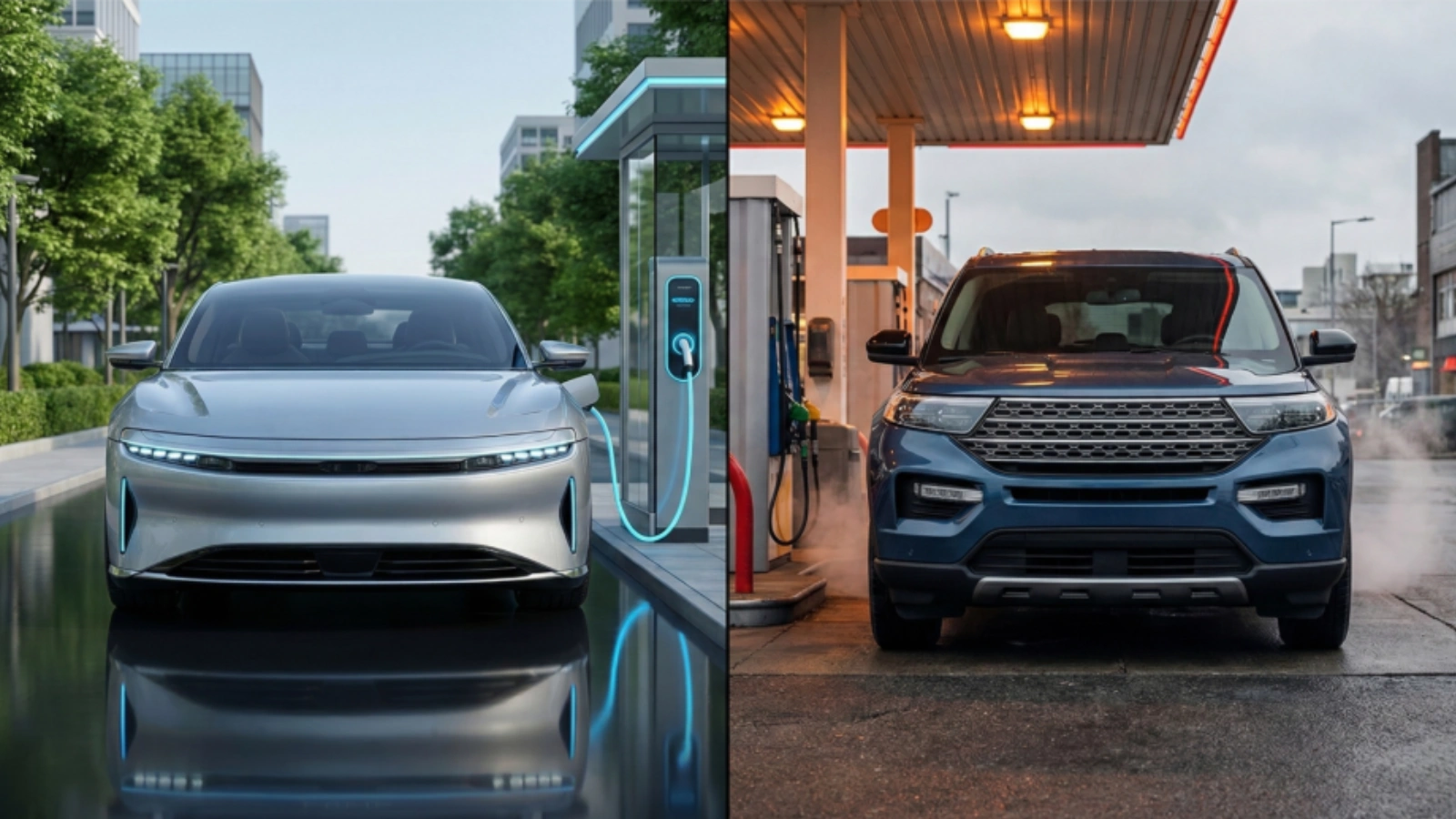
Choosing a new car in 2026 feels very different from what it did just a few years ago. Earlier, the decision revolved around mileage, maintenance, and brand loyalty. Today, buyers are asking a bigger question: electric car vs petrol car — which truly makes more sense?
With electric mobility gaining momentum and petrol vehicles continuing to evolve, the debate is no longer about which is better overall, but which is more efficient for your lifestyle, driving habits, and long-term costs. Let’s break it down in a practical, real-world way.
Electric car vs petrol car — key differences explained
At the most basic level, the difference between an electric vehicle and a petrol vehicle lies in how energy is generated and used.
An electric car runs on electricity stored in batteries, powering an electric motor. A petrol car, on the other hand, relies on combustion — fuel ignites inside an engine to create motion. This fundamental distinction changes everything from efficiency to maintenance and daily convenience.
Electric cars deliver instant torque, quieter drives, and zero tailpipe emissions. Petrol cars offer longer range, faster refuelling, and widespread infrastructure support. While EVs represent the future of mobility, petrol cars continue to adapt with improved engine technologies and smarter fuel optimisation solutions.
The electric car and petrol car comparison today is less about replacement and more about suitability.
How energy efficiency is calculated in EVs vs petrol cars
Fuel efficiency has traditionally been measured in kilometres per litre for petrol vehicles. EVs introduced a new metric: kilometres per kilowatt-hour (kWh).
Electric vehicles convert nearly 75–85% of stored electrical energy into motion. Petrol engines typically convert only 20–30% of fuel energy into usable movement, with the rest lost as heat.
On paper, this makes EVs appear significantly more efficient. However, real-world conditions tell a fuller story. Charging losses, battery degradation, climate control usage, and driving patterns all influence EV efficiency. Similarly, petrol cars vary widely depending on engine health, fuel quality, and driving behaviour.
This is where optimisation matters. A well-maintained petrol engine using high-quality fuel and performance-enhancing additives can significantly reduce inefficiencies caused by deposits and incomplete combustion.
Running cost per kilometre: electricity vs petrol
When buyers ask, which car is best — EV or petrol?, running cost is often the deciding factor.
Electricity generally costs less per kilometre than petrol, especially when charging at home. Urban drivers covering predictable daily distances often find EVs economical in day-to-day use.
However, the picture changes depending on charging type. Fast chargers and public charging networks can increase electricity costs considerably. Additionally, charging time itself becomes a factor — convenience carries value.
Petrol cars may cost more per kilometre in fuel, but refuelling takes minutes and range anxiety is virtually non-existent. Improved fuel efficiency technologies and engine care solutions can also narrow the running cost gap significantly.
For many drivers, especially those travelling long distances or living in areas with limited charging access, petrol vehicles still offer dependable cost predictability.
Infrastructure and convenience factors in 2026
Infrastructure plays a larger role than most comparisons acknowledge.
Charging networks have expanded rapidly across cities, yet availability remains uneven in smaller towns and highways. Apartment living can also complicate home charging access.
Petrol infrastructure, meanwhile, remains universally accessible. Fuel stations are quick, familiar, and reliable regardless of location.
Convenience is not only about technology but also about routine. Drivers who prefer spontaneity and long road trips often lean towards petrol vehicles, while structured urban commuting aligns well with EV ownership.
In 2026, both ecosystems coexist — each serving different mobility needs rather than competing directly.
Long-term ownership costs compared
Long-term ownership reveals a more nuanced comparison between an electric car and petrol car.
EVs typically require fewer mechanical services because they have fewer moving parts. There are no oil changes, fewer fluids, and reduced engine wear. However, battery health becomes a long-term consideration, and replacement costs, though gradually decreasing, remain significant.
Petrol vehicles involve regular servicing, but repair ecosystems are mature and widely accessible. Spare parts, trained mechanics, and predictable maintenance schedules provide reassurance to many owners.
Efficiency over time largely depends on how well a vehicle is maintained. A clean, optimised engine continues to deliver strong mileage and smoother performance even after years of use.
Where fuel additives fit for maximising petrol car efficiency
While EV technology advances, millions of drivers still rely on petrol cars daily — and efficiency within combustion engines continues to improve.
Fuel additives play an increasingly important role in maintaining performance. Over time, carbon deposits build up inside injectors and combustion chambers, reducing fuel efficiency and increasing consumption.
High-quality solutions like Milex Fuel Additives help clean engine components, improve combustion quality, and support smoother engine operation. The result is better mileage, improved responsiveness, and more efficient fuel usage — helping petrol cars remain competitive in a rapidly evolving automotive landscape.
For drivers who want to maximise every litre of fuel, optimisation becomes just as important as fuel choice itself.
Drive smarter, not harder. Enhance your car’s efficiency with Milex Fuel Additives and make every kilometre count.
FAQs
Do electric cars have lower servicing requirements than petrol cars?
Yes. EVs generally require less routine servicing because they have fewer moving mechanical components. Petrol cars, however, benefit greatly from regular maintenance to sustain efficiency.
How does battery replacement cost compare to engine overhaul costs?
Battery replacement can be expensive but is becoming more affordable over time. Engine overhauls in petrol cars may also be costly, though they are less frequent with proper care.
Are petrol cars becoming outdated in 2026?
Not at all. Petrol vehicles continue to evolve with improved efficiency, cleaner combustion technologies, and optimisation solutions that extend their relevance.
How does resale value compare between EV and petrol cars?
Resale value varies by market demand and battery health for EVs, while petrol cars benefit from established resale ecosystems and broader buyer familiarity.
Is charging an EV always cheaper than refuelling a petrol car?
Not always. Home charging is typically cheaper, but public fast charging can narrow or even eliminate the cost advantage depending on electricity tariffs.
Related Reads for EV Car vs Petrol Car: Which Is More Fuel Efficient in 2026?
If you’re comparing long-term fuel efficiency, evolving fuel blends, and the future of combustion engines, these articles add deeper context: