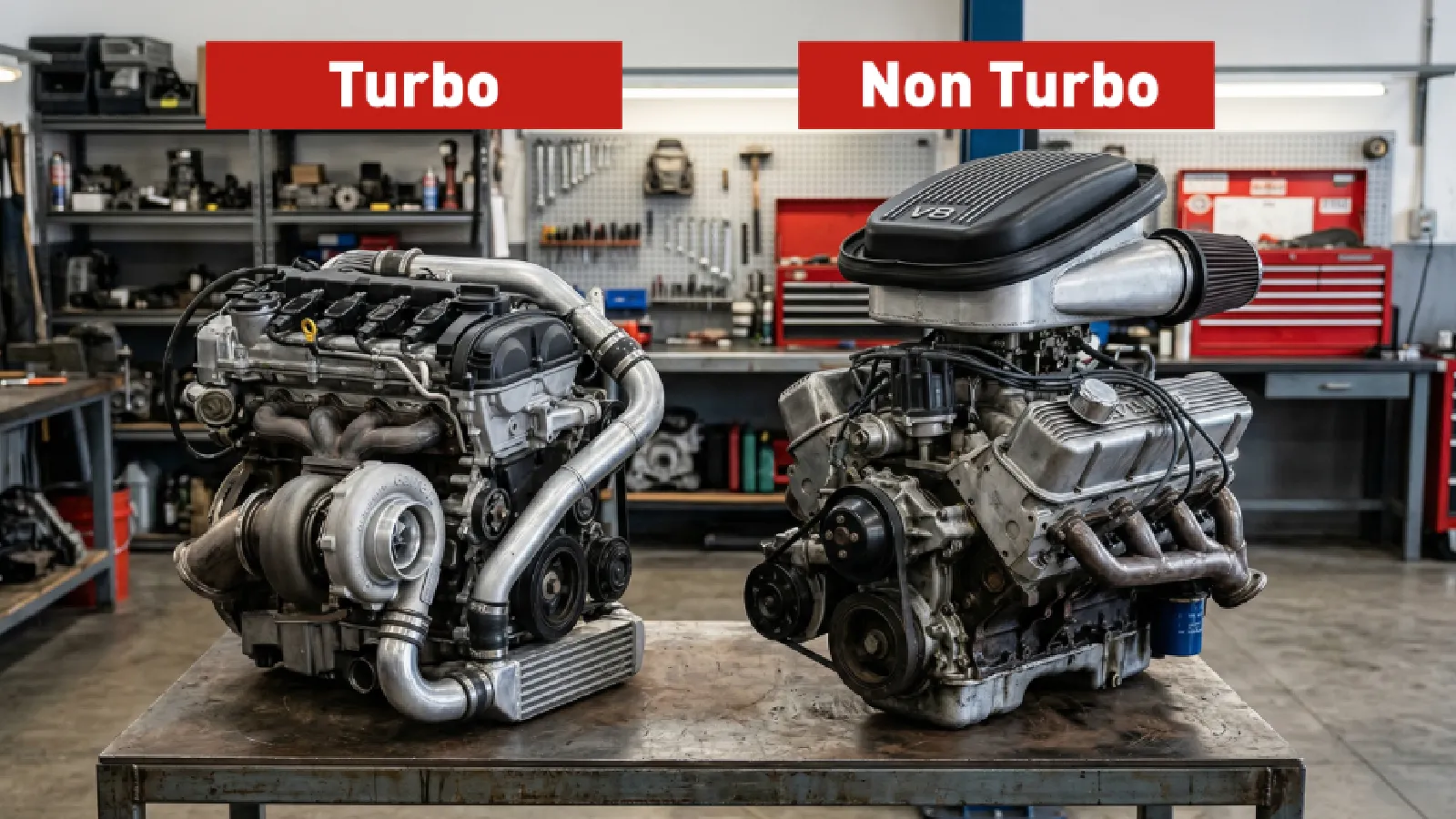
When you’re choosing a car or simply trying to understand what’s under your bonnet, the debate around a turbo engine vs normal engine often comes up. While both serve the same purpose—getting you from A to B—the way they deliver power, efficiency, and performance is quite different. Let’s break it down in a way that feels less mechanical and more real-world.
What a normal car engine is and how it works
A normal engine, also known as a naturally aspirated engine, is the simpler of the two. It pulls air into the engine purely through atmospheric pressure, mixes it with fuel, and ignites it to create power.
Think of it like breathing naturally—no assistance, just a steady, predictable rhythm. The power output depends on engine size (displacement) and how much air it can take in on its own.
Because of this simplicity, normal engines tend to feel linear. You press the accelerator, and the power builds smoothly without surprises. It’s reliable, straightforward, and has been the backbone of cars for decades.
What a turbo engine is and how it works
To understand the turbo engine meaning, imagine giving your engine an extra set of lungs.
A turbo engine uses a device called a turbocharger that forces more air into the combustion chamber. It does this by using exhaust gases to spin a turbine, which in turn compresses incoming air. More air means more fuel can be burned, resulting in more power.
So, when you ask how turbo engine works, the answer lies in recycling energy that would otherwise be wasted through the exhaust. It’s clever engineering that turns efficiency into performance.
Key performance differences between turbo and normal engines
The difference between turbo engine and normal engine becomes obvious the moment you drive them back-to-back.
A normal engine delivers power in a gradual and predictable way. It’s calm, consistent, and easy to manage. A turbo engine, on the other hand, can feel more energetic. Once the turbo kicks in, there’s a noticeable surge of power.
Turbo engines often allow smaller engines to produce the same—or even greater—power than larger naturally aspirated ones. That’s why you’ll see compact cars today delivering performance that once requiredbigger engines.
How turbochargers improve power and acceleration
Turbochargers shine when it comes to acceleration.
By forcing more air into the engine, they enable a stronger combustion process. This translates to quicker throttle response and better pickup, especially when overtaking or merging onto highways.
That sudden push you feel when accelerating in a turbocharged car isn’t just excitement—it’s efficiency being converted into usable power. It’s particularly useful in modern driving conditions where quick bursts of speed matter more than sustained high speeds.
Fuel efficiency comparison between turbo and normal engines
On paper, turbo engines can be more fuel-efficient. Because they extract more power from a smaller engine, they don’t always need to work as hard.
However, real-world efficiency depends on driving behaviour. If you frequently push a turbo engine hard, it will consume more fuel. A normal engine, being more predictable, often delivers consistent fuel economy without surprises.
This is where maintenance and fuel quality start to play a crucial role in ensuring both engine types perform efficiently over time.
Maintenance and reliability differences between the two engines
Normal engines are simpler, which usually means fewer components that can wear out or fail. This often makes them easier and sometimes cheaper to maintain.
Turbo engines, while more advanced, operate under higher pressure and temperature. The turbocharger itself is an additional component that requires care. Poor fuel quality or irregular maintenance can lead to issues like carbon deposits or reduced efficiency.
That said, modern turbo engines are far more reliable than they used to be—provided they are maintained properly.
Which engine type is better for everyday driving
There isn’t a one-size-fits-all answer.
If your driving is mostly within the city, with stop-start traffic and shorter distances, a normal engine offers smoothness and simplicity. It’s predictable and less demanding in terms of upkeep.
If you enjoy spirited driving, frequent highway runs, or want more power without upgrading to a larger engine, a turbocharged engine makes a strong case.
Ultimately, the choice comes down to how you drive, not just what you drive.
How fuel additives help maintain engine performance and combustion efficiency
Whether you drive a turbo or a naturally aspirated car, one thing remains constant—engine health depends heavily on combustion quality.
Over time, deposits can build up in the fuel system, injectors, and combustion chamber. This affects performance, reduces efficiency, and in turbo engines, can even impact how effectively the turbo operates.
This is where fuel additives for turbo engines and normal engines alike make a difference.
Milex Fuel Additives are designed to keep your engine clean from within. By improving combustion efficiency, reducing deposits, and maintaining injector performance, they help your engine deliver power the way it was meant to—smoothly and consistently.
For turbo engines, this means better responsiveness and reduced strain. For normal engines, it ensures steady performance and longevity.
If you’re looking to get the best out of your engine, regardless of type, MilexGlobal offer a simple yet effective way to maintain performance over time.
FAQs
Is a turbo engine better than a normal engine for city driving?
Not necessarily. Normal engines are often smoother in stop-start traffic, while turbo engines may feel more responsive but can be less efficient in constant low-speed conditions.
Do turbo engines consume more fuel than normal engines?
They can, especially if driven aggressively. Under moderate driving, they can be just as efficient or even better.
Why do modern cars use turbocharged engines?
To achieve higher power output from smaller engines while meeting stricter emission and efficiency standards.
Does a turbo engine require special fuel?
Most modern turbo engines run fine on standard fuel, but higher-quality fuel and additives can help maintain performance.
Can turbo engines experience engine knock more easily?
Yes, due to higher pressure inside the engine. Proper fuel quality and additives can help reduce this risk.
Related Reads for Turbo vs Normal Car Engines: Performance Differences Explained
If you’re comparing engine performance, fuel efficiency, and long-term maintenance, these articles will help you understand how fuel quality, additives, and modern engine technologies impact overall driving experience: