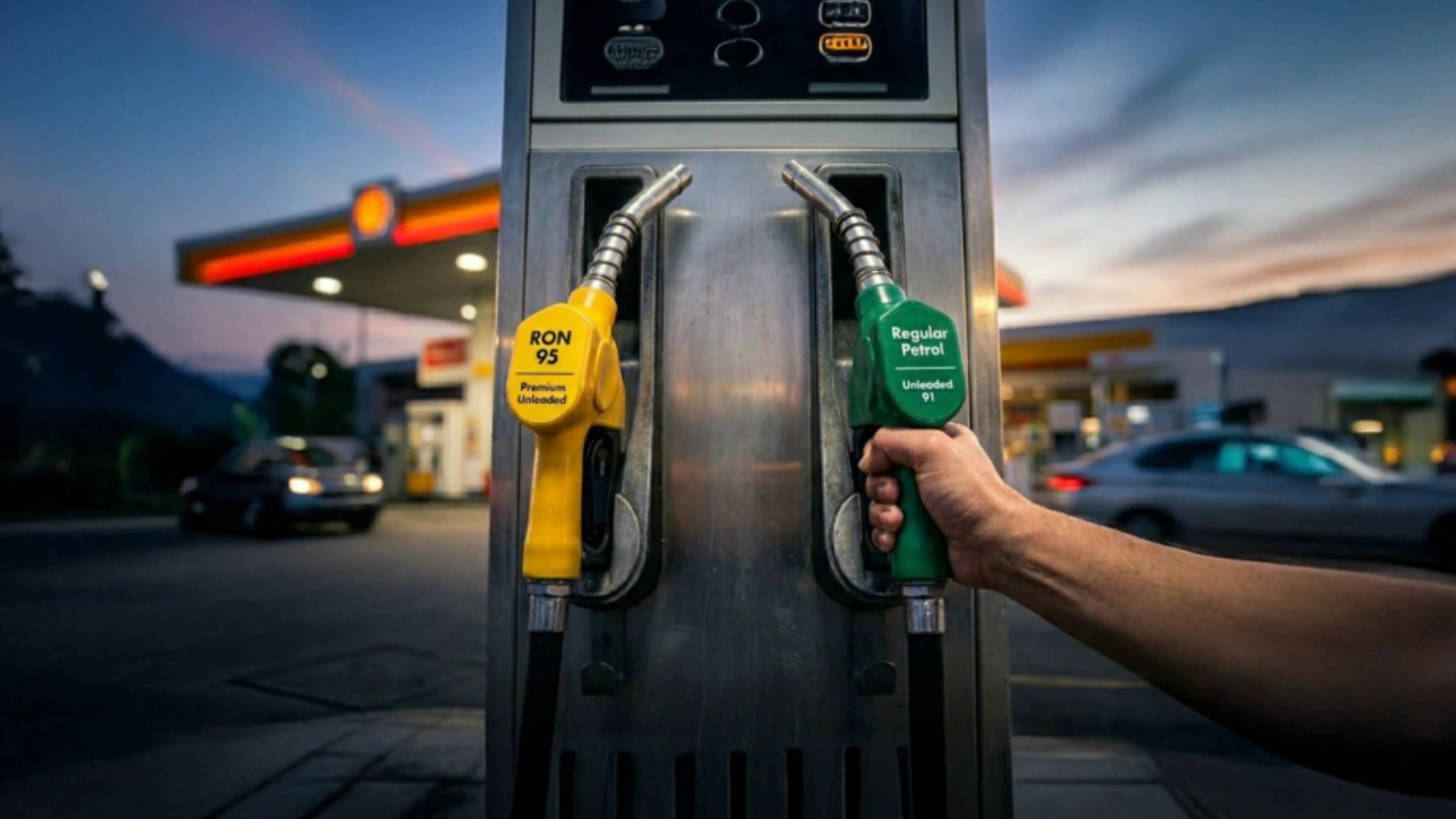
If you’ve ever stood at the fuel pump wondering whether to reach for the RON 95 nozzle or stick with the regular option, you’re not alone. It’s one of the most common questions drivers ask, and the answer isn’t as straightforward as fuel companies might have you believe. Whether you’re trying to protect your engine, stretch your fuel budget, or simply get the most out of every litre, understanding what’s actually in your tank matters. Let’s break it down.
What RON 95 Fuel Actually Means
RON 95 refers to a petrol grade with a Research Octane Number (RON) of 95. The research octane number indicates the combustibility of engine fuel at low speeds and temperatures; it reflects fuel behaviour under idling conditions and during acceleration. The higher the RON rating, the more compression the fuel can withstand in a spark-ignition engine before igniting.
In many parts of the world, RON 95 is the standard grade at the pump. In Malaysia, for example, the “regular” unleaded fuel is 95 RON, with premium fuel rated at 97 RON, and Shell’s V-Power Racing rated at 99 RON. In the United Kingdom, “regular” petrol also has an octane rating of 95 RON. So depending on where you are in the world, RON 95 could be the everyday standard, or a step up from it.
Understanding Octane Ratings in Petrol
Octane ratings can feel confusing, especially when numbers vary between countries. Here’s the simple version.
The octane rating is the measure of fuel stability. It is based on the pressure at which a fuel spontaneously combusts in a testing engine. The higher an octane number, the more stable the fuel.
To determine the RON, the fuel is tested under engine idle conditions with a low air temperature and slow engine speed. This is why RON is sometimes called a “best case” measure, it reflects how fuel performs under relatively gentle conditions.
It’s also worth noting that the number you see at the pump in different countries isn’t always comparing apples to apples. North America and Brazil use an average of the RON and the Motor Octane Number (MON), called the Anti-Knock Index (AKI). So 91 AKI in the USA is roughly equivalent to 95 RON in the rest of the world. This is why European and Asian cars often list a minimum of 95 RON, it’s the global standard for what most countries call “regular” petrol.
RON 95 vs Regular Petrol: Key Differences Explained
What separates RON 95 from a lower-grade “regular” petrol (such as RON 91 or RON 90) comes down to one key characteristic: knock resistance.
The octane rating describes a fuel’s ability to resist premature burning, also known as engine knock. The term originates from the knocking sound an engine may make if the fuel burns too early, before the spark plug has fired to ignite it.
Premium unleaded petrol, often marked as 95, has a higher octane rating than regular unleaded. It offers greater resistance to engine knock and is commonly recommended for vehicles with higher compression engines.
In practical terms, this means RON 95 can handle greater pressure inside the cylinder before igniting on its own. For engines engineered to take advantage of that, the difference is real and measurable. For engines designed around a lower octane, the gap is far less significant — which brings us to combustion.
How Octane Levels Affect Engine Combustion
Inside every petrol engine, a carefully timed explosion drives your car forward. Engines are designed to burn fuel in a controlled combustion. A flame starts at the spark plug and burns throughout the cylinder until all the fuel is consumed. In comparison, spontaneous combustion which is also called auto-ignition, detonation, or knock, happens when rising temperature and pressure cause unburned fuel to ignite prematurely. This uncontrolled secondary combustion causes pressure in the cylinder to spike, which can damage the engine.
Higher octane fuel like RON 95 resists this uncontrolled ignition more effectively. Premium grade fuels optimise an engine’s ability to make power through a more controlled burn, reducing engine ping and resulting in a smoother delivery of power. These fuels also contain detergents and boosters which keep components such as valves, pistons, and combustion chambers free of carbon build-up.
Modern engines are also equipped with knock sensors. These sensors detect if engine knock is occurring. If it does, the electronic fuel injection system can adjust the spark ignition timing to prevent it from recurring, though this often comes at the cost of reduced power and worse fuel economy. So even if your engine “accepts” a lower-grade fuel, it may quietly be giving up performance to compensate.
Which Cars Benefit the Most from RON 95 Petrol
Not every car will respond the same way to RON 95. Many European cars, turbocharged vehicles, and performance-oriented models specify 95 RON as the minimum fuel requirement. In these vehicles, using 95 can help maintain smooth acceleration, consistent power delivery, and optimal fuel efficiency.
Higher compression ratios can make petrol engines subject to engine knocking if lower octane-rated fuel is used, which can reduce efficiency or damage the engine if knock sensors are not present to modify ignition timing.
On the other hand, for cars designed to run on 91, switching to 95 will not usually deliver noticeable performance gains. In most cases, the extra cost is unlikely to be offset by improved fuel economy or engine benefits unless the manufacturer specifically recommends premium fuel.
The golden rule is simple: check your owner’s manual or the fuel flap inside your car’s fuel cap cover. That single step tells you exactly what your engine needs and saves you from either under-fuelling or over-spending.
Does Using RON 95 Improve Mileage or Performance?
This is where the answer becomes very vehicle-specific. According to NRMA motoring expert Jack Haley, on average RON 95 can deliver around 4 per cent lower fuel consumption than 91, assuming the engine’s computer adjusts to take advantage of the octane difference.
A joint analysis conducted by AFPM and USCAR found that a 95 RON octane standard would increase fuel efficiency by 3–4 per cent for new vehicles designed around it. That may sound modest, but over the life of a vehicle and thousands of litres of fuel, it adds up.
However, if your car is built for a lower octane grade, higher octane petrol doesn’t automatically improve fuel efficiency. Fuel consumption is influenced by engine design, driving conditions, vehicle load, and driving style. In cars designed for regular unleaded, fuel economy is unlikely to improve with premium petrol.
In short: RON 95 can genuinely improve mileage and performance — but only when your engine is built to benefit from it.
Cost Comparison: Is RON 95 Worth Paying More For?
The honest answer is: it depends on your car. NRMA vehicle safety expert Jack Haley notes that the maximum improvement from using a higher octane fuel is about 1 per cent per octane number. Going from 91 to 95 would yield a maximum fuel consumption reduction of around 4 per cent and that saving only makes financial sense if the price difference between the two grades is less than 4 per cent.
Consistently using a lower RON fuel than recommended can lead to engine damage over time due to increased knocking and stress on engine components. The decision becomes a balance of cost, vehicle requirements, and personal preference. For the average driver, sticking to the manufacturer’s recommendation will provide the best blend of performance, efficiency, and engine health.
So if your car requires RON 95, using it is an investment. If your car runs happily on a lower grade, upgrading to RON 95 every tank is unlikely to pay off at the pump.
How Fuel Additives Help Maintain Combustion Efficiency in Petrol Engines
Here’s the thing: even the right octane grade doesn’t guarantee a perfectly clean, efficient engine over time. That’s where fuel additives come in, and it’s where a product like Milex can make a genuine difference.
Regardless of whether you’re running RON 95 or a lower-grade petrol, engines accumulate carbon deposits, suffer from moisture build-up in fuel systems, and experience gradual wear on injectors and fuel lines. No petrol grade alone solves these issues fully.
MilexGlobal Technology is formulated to work alongside your fuel (whichever grade you use) to restore and protect combustion efficiency. Its comprehensive cleaning action breaks down stubborn carbon deposits that reduce engine power and increase fuel consumption. Its corrosion inhibitors shield metal components from moisture damage, while its lubricating properties reduce wear on fuel injectors and pumps, keeping them operating at their best.
Think of it this way: choosing the right octane for your car is step one. Keeping your engine clean and protected so it can actually use that fuel efficiently is step two, and that’s exactly what Milex is designed to do.
Whether you fill up with RON 95 or regular petrol, adding Milex Additive to your tank is the smart, simple way to make sure every litre works harder for you. Just 1 ml per litre is all it takes to experience smoother acceleration, quieter engine operation, and a fuel system that stays in peak condition for longer.
FAQs
What does RON 95 fuel actually mean?
RON 95 refers to a petrol grade with a Research Octane Number of 95. The RON rating measures how much compression the fuel can withstand before igniting on its own. The higher the number, the more stable the fuel. In many countries (including Malaysia and the UK) RON 95 is simply the standard grade at the pump, though this varies by region.
How do octane ratings in petrol work?
The octane rating measures a fuel’s stability, specifically, the pressure at which it spontaneously combusts in a test engine. A higher octane number means the fuel is more resistant to premature ignition. It’s also worth knowing that different countries measure octane differently: North America uses the Anti-Knock Index (AKI), which averages two separate ratings, so a 91 AKI in the US is roughly equivalent to 95 RON elsewhere in the world.
What are the key differences between RON 95 and regular petrol?
The core difference is knock resistance. Lower-grade fuels like RON 91 or RON 90 are more prone to premature ignition, where fuel burns before the spark plug fires, causing a knocking sound and potential engine damage. RON 95 withstands greater cylinder pressure before self-igniting, making it better suited to engines designed with higher compression ratios. It also typically contains more detergents that help keep engine components clean.
How do octane levels affect engine combustion?
In a healthy engine, combustion is controlled: a flame starts at the spark plug and burns evenly through the cylinder. When octane levels are too low for the engine’s compression, fuel can ignite prematurely in an uncontrolled way, this is called knock or detonation. It creates pressure spikes that can damage pistons, valves, and other components. Higher octane fuel like RON 95 resists this, allowing for a cleaner, more controlled burn and smoother power delivery.
Which cars benefit the most from RON 95 petrol?
Cars that benefit most are those that specify it, typically European vehicles, turbocharged engines, and higher-performance models with elevated compression ratios. For these cars, RON 95 helps maintain smooth acceleration, consistent power, and optimal efficiency. For vehicles designed around a lower octane grade, switching to RON 95 will generally deliver little to no noticeable benefit.
Does using RON 95 improve mileage or performance?
It can, but only if your engine is built to take advantage of it. Studies suggest RON 95 can deliver around 3–4% better fuel efficiency in vehicles engineered around that octane standard. In cars designed for lower-grade fuel, the engine’s computer won’t adjust enough to make a meaningful difference, and fuel economy is unlikely to improve in any significant way.
Is RON 95 worth paying more for?
That depends entirely on what your car requires. For vehicles that specify RON 95, using it protects the engine and maintains performance. So yes, it’s worth it. For cars designed to run on RON 91, the maximum efficiency gain of roughly 4% from upgrading is unlikely to offset the price premium at the pump. The simplest guide: check your owner’s manual or fuel cap cover and follow the manufacturer’s recommendation.
How do fuel additives help maintain combustion efficiency in petrol engines?
Even the right octane grade can’t fully prevent carbon deposits, moisture build-up, or injector wear over time. Fuel additives address these issues directly: breaking down carbon deposits that reduce power and increase fuel consumption, inhibiting corrosion from moisture, and lubricating fuel injectors and pumps to keep them performing precisely. Think of choosing the right octane as step one; keeping the engine clean enough to actually use that fuel efficiently is step two.
Related Reads for RON 95 vs Regular Petrol: What’s the Real Difference?
If you’re trying to understand whether higher octane fuel really makes a difference or if additives offer a better alternative, these articles will help you make a smarter choice: